
Expert analysis
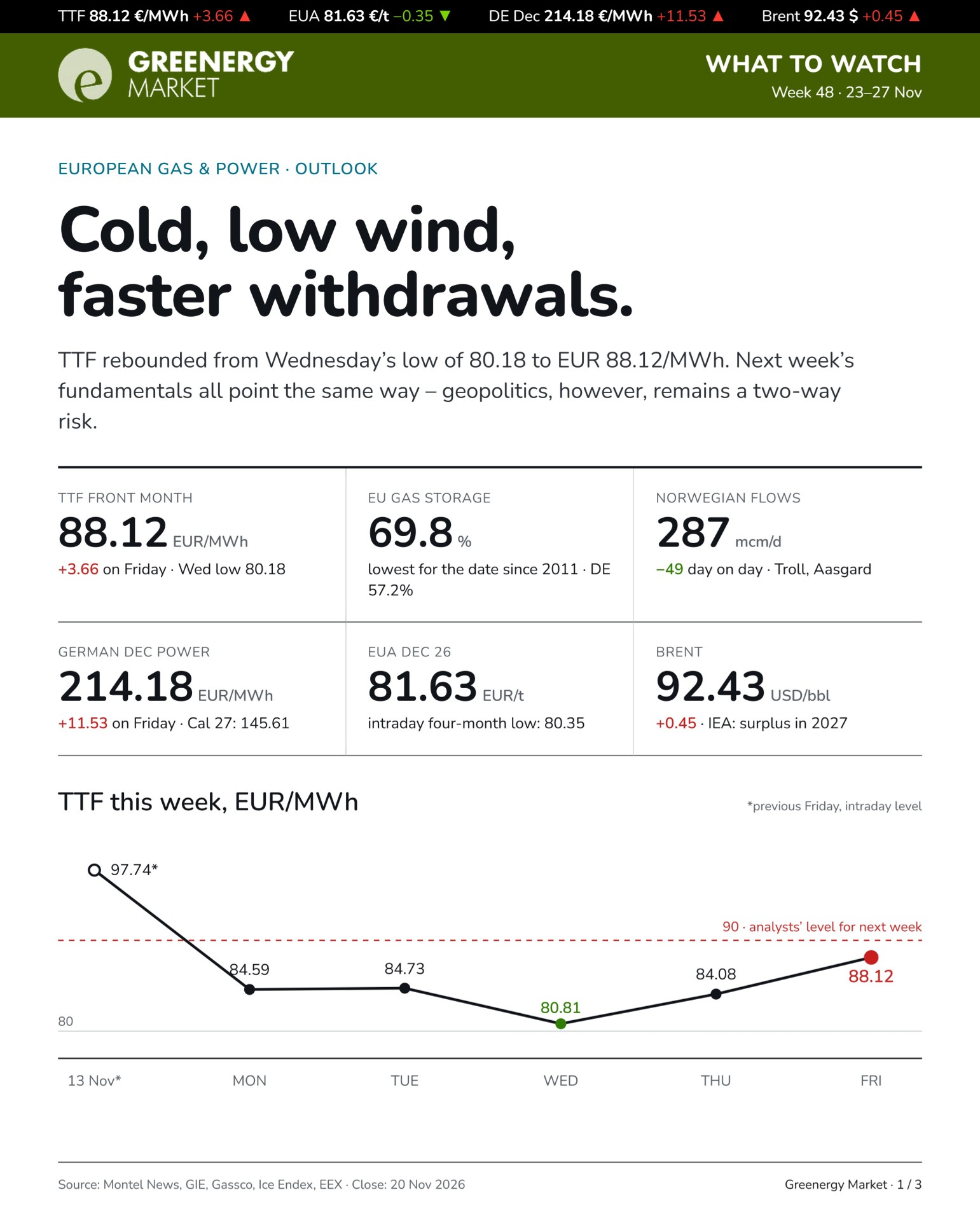
TTF fell as low as EUR 80.18/MWh this week before closing Friday at 88.12. The sell-off was driven mainly by position liquidation, geopolitics and a few days of mild weather. Fundamentals did not improve. Next week hinges on these factors:
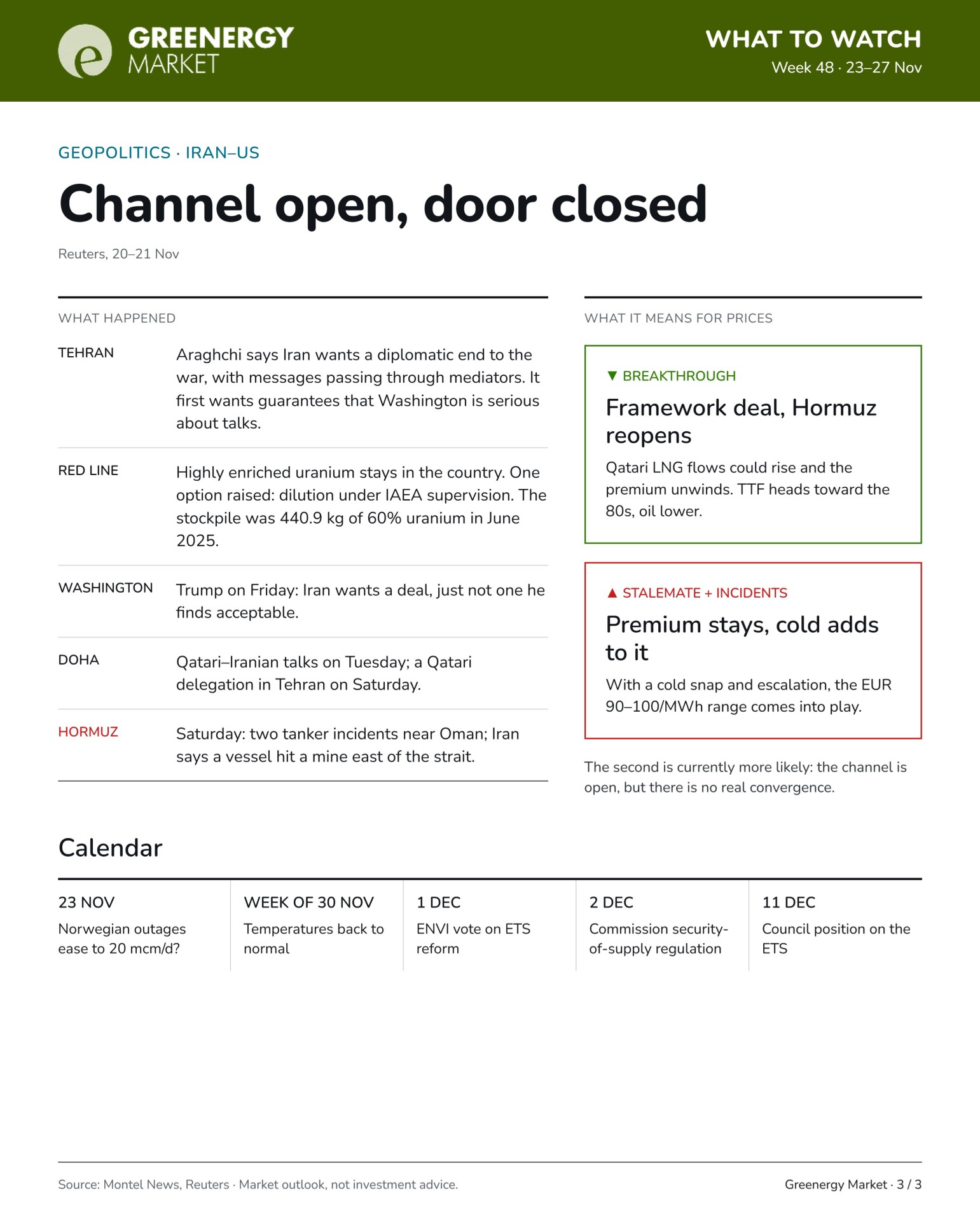
Temperature. Germany is set to run 1–3°C below the seasonal norm next week, returning to normal from the week of 30 November.
Wind. Output is expected to be well below the seasonal average. That means more gas-fired generation, while German demand climbs 1.9 GW above normal.
Storage. EU stocks are at 69.8% and withdrawals are accelerating. German storage stands at 57.2%.
Norwegian flows and LNG. Outages at Troll and Aasgard cut Norwegian flows by 49 mcm in a single day, to 287 mcm/d. Some relief is expected by Monday. Only about a third of pre-war LNG traffic is still moving through the Strait of Hormuz.
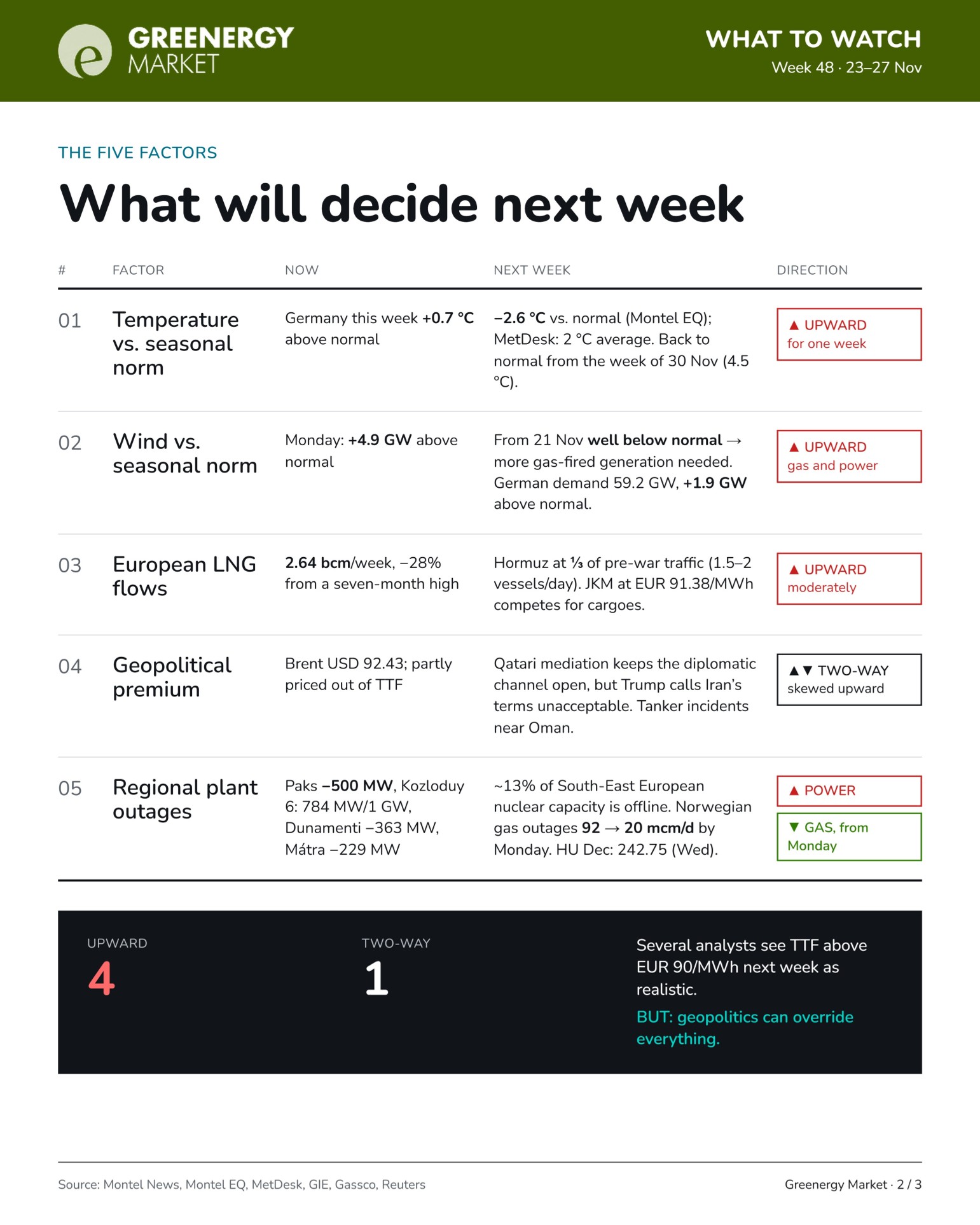
Geopolitics. This is the hardest factor to price. According to Reuters, Iran’s foreign minister Araghchi is still seeking a diplomatic solution, with talks continuing through Qatari mediation. On Friday, however, Trump said Iran wants a deal, just not one he would accept. Two tanker incidents were reported near Oman on Saturday.
Regional power. One 500 MW unit at Paks is in maintenance, and Kozloduy 6 is running at 784 MW after Thursday’s fault. Around 13% of nuclear capacity in South-East Europe is unavailable. All of this is pushing Hungarian power prices higher.
Big picture: four factors point up, one is two-way. Several analysts see TTF moving above EUR 90/MWh next week. A genuine diplomatic breakthrough could reverse that quickly, but there are few signs of one right now.
Calendar: 1 December, ENVI vote on the ETS; 2 December, Commission security-of-supply regulation; 11 December, Council position.
Source: Montel News, Reuters
Analysis written by: Tóth Eszter Lilla
23.11.2026