
Expert analysis
TTF Back Above €60/MWh
Geopolitical risks in the Middle East have risen sharply again, providing renewed support for energy prices.
Today’s key developments:
• The United States and Saudi Arabia carried out joint airstrikes against Iranian-backed armed groups in Iraq after Iran targeted U.S. military bases and vessels transiting the Strait of Hormuz.
• Donald Trump has threatened a strong military response as tensions between Iran and the United States escalate once again, while the prospects for a diplomatic resolution continue to diminish.
• Brent crude oil has climbed back above USD 90 per barrel as markets increasingly price in the risk of supply disruptions.
• At the same time, Yemen’s Houthi movement is reportedly considering a new pressure tactic: imposing transit fees on commercial vessels passing through the Bab el-Mandeb Strait. Under the proposal, Chinese vessels could be exempt, further heightening geopolitical tensions and contributing to the fragmentation of global trade routes.
• Any closure or disruption of the Bab el-Mandeb Strait would be particularly significant for Saudi Arabia, as it serves as the country’s second critical export corridor alongside the Strait of Hormuz. If disruptions were to occur in both maritime chokepoints simultaneously, global oil and LNG supply risks could increase substantially.
What does this mean for the market?
Market attention remains firmly focused on the Middle East’s two strategic maritime chokepoints: the Strait of Hormuz and the Bab el-Mandeb Strait. As long as the risk of military escalation persists, a significant geopolitical risk premium is likely to remain embedded in oil, natural gas, and electricity markets.
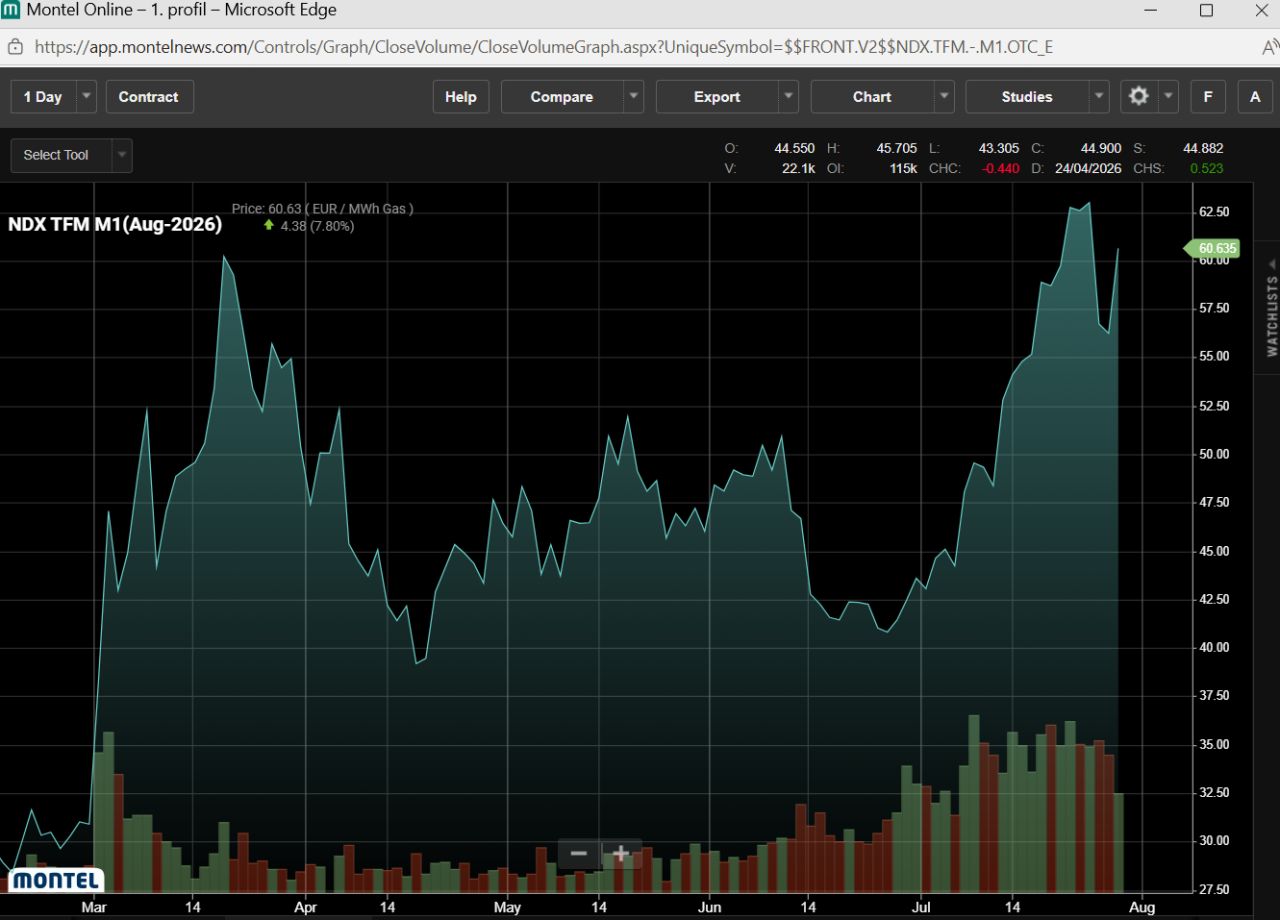
Source: Reuters Chart: Montel Analytics
Analysis written on: Tóth Eszter Lilla
29.07.2026.